
The loop is filled once. Then it stays shut.
Every drop this building uses for cooling arrives on a truck, from outside the county, one time. Here's the whole system — including what happens when something goes wrong.
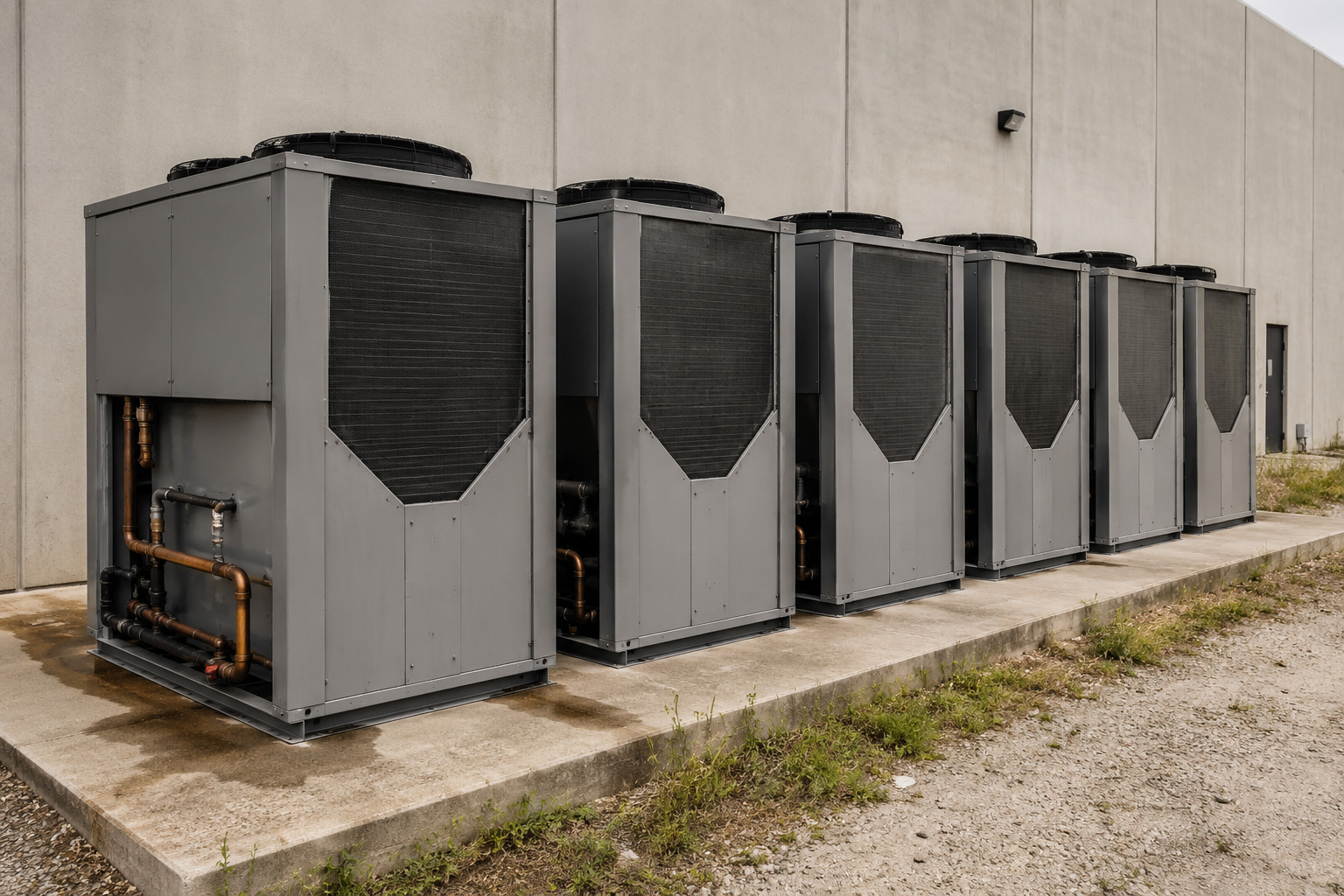
A sealed loop isn't a promise. It's a description of the equipment.
The chillers specified for this building are air-cooled by design — it's in the product name. There's no cooling tower to install, no evaporative circuit to run, and no plumbing between this system and the municipal supply. It isn't restraint on our part. It's the machine.
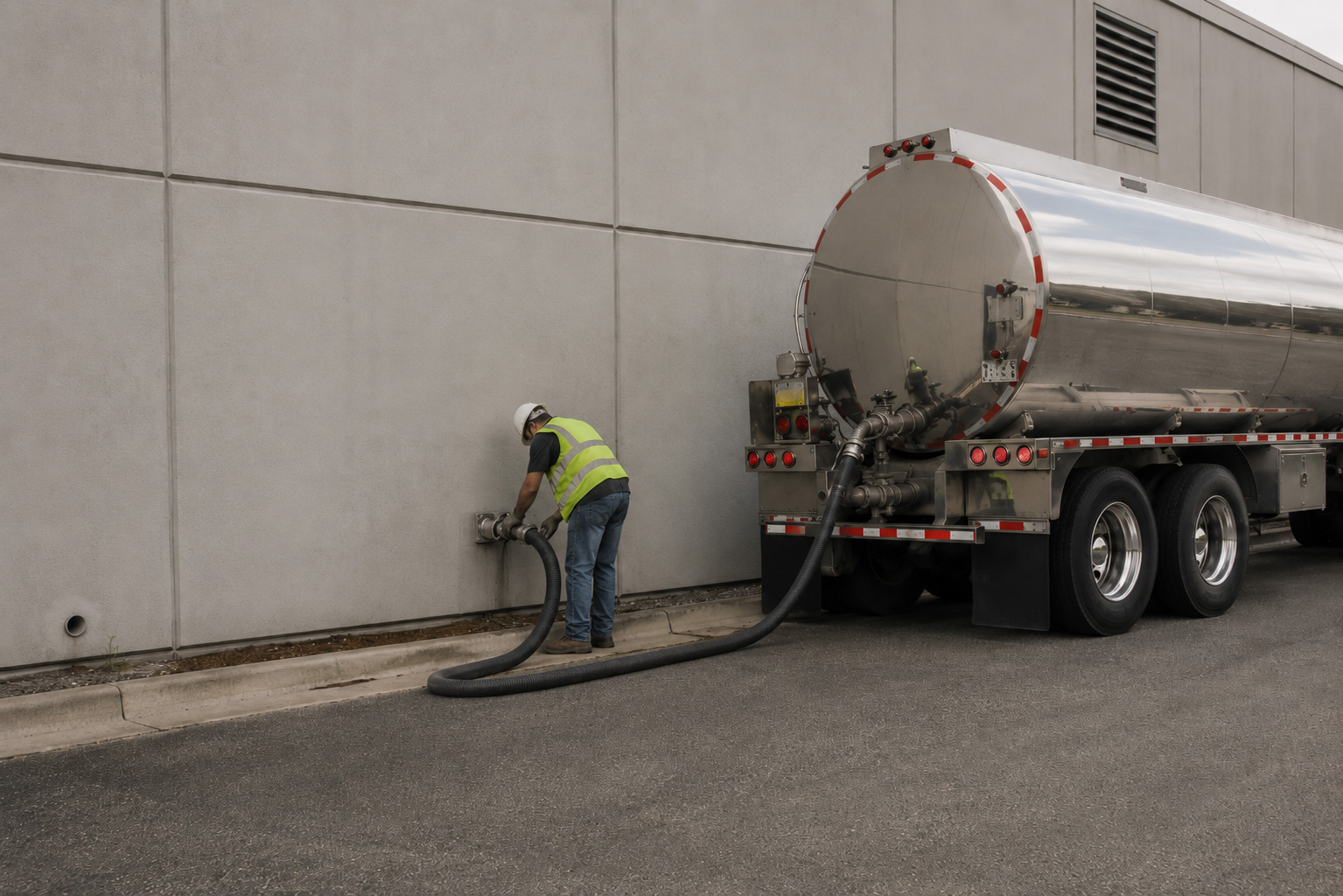
Illustrative.
Where the water actually comes from
The loop is charged once, by tanker, from a qualified source outside the county. It isn't drawn from Marietta's supply, and it isn't drawn from Cobb's.
After that, it recirculates. The same water that goes in on day one is the water still in the pipes years later — tested regularly, topped up if the chemistry drifts, never dumped and refilled.
Why there are no cooling towers
The fear people bring to these meetings is real, and it's about a different machine. Evaporative cooling works by letting water turn to steam — that's the plume you've seen, and that's where millions of gallons go.
This system rejects heat to the air instead. The trade-off is that air-cooled equipment is less efficient and costs more to run. We took that trade because the alternative spends water this county doesn't have to spare.
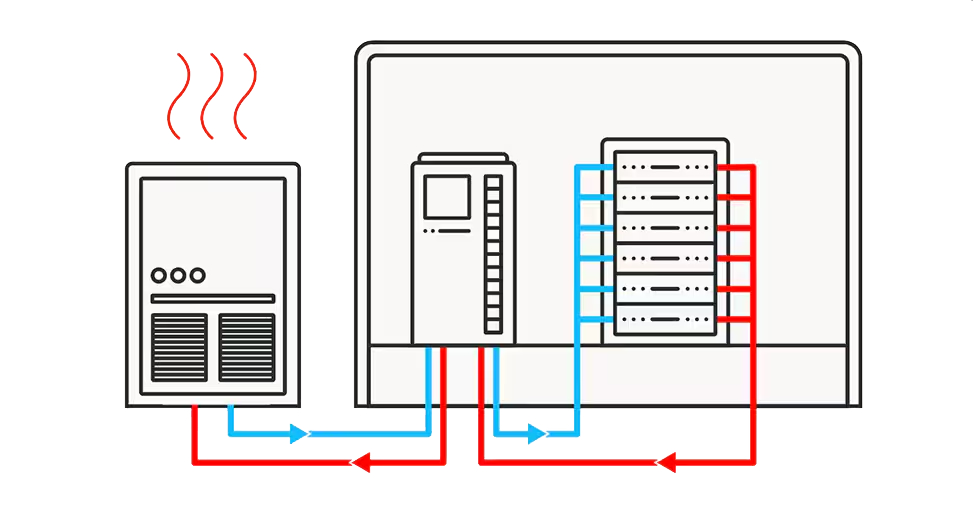
Illustrative comparison.
Illustrative.
The glycol, and why it's there
The loop isn't pure water. It's a water-and-glycol mix, which is standard for equipment that has to run through a Georgia January without freezing.
Glycol is worth naming plainly rather than leaving to be discovered: it's the same class of fluid used in car coolant and in the HVAC systems of most large buildings in this city. It stays inside a closed loop, and the reason the leak detection below exists is that we treat it as something worth containing.
What happens if something leaks
There's a sensor at every valve and every joint where a leak could start, reporting continuously to the building system.
If one detects moisture, the system alarms. If it detects enough, it isolates that chiller on its own — nobody has to be standing there. Containment stays on site, and anything above the regulated volume gets reported to the EPA, whether or not anyone noticed.
We'd rather tell you this now than have you find it in a filing later. A sealed system is not a system that can never leak. It's a system built so that a leak is small, contained, and known about immediately.
Sensor positions per the operations procedure.
Every number on this page, and where it came from.
If a figure isn't in this table, it isn't ours to claim.
| Claim | Figure | Source |
|---|---|---|
| Cooling type | Air-cooled screw chillers | Equipment spec |
| City water used for cooling | None | Application |
| Cooling towers | None | Application |
| Process discharge to sewer | None | Application |
| Loop fluid | Water and glycol mix | Equipment spec |
| Loop volume | — | Pending — site engineering |
| Fluid testing interval | — | Pending — operations procedure |
Note: figures marked pending will be published once confirmed, whatever they say.
Something on this page not add up?
Tell us and we'll correct it. Every question sent through this page gets answered here, in public — including the ones we'd rather not have been asked.