What adaptive reuse actually means for a forty-year-old building
The cheapest, quietest thing you can do with a warehouse is not knock it down.

Published by theEdge, the applicant in Case Z2026-12. This is our account of our own project.
"Adaptive reuse" is a term of art, and like most terms of art it is doing work that plain words would do better.
What it means is: the building is already there, so use it.
That sounds like nothing. It is the least interesting sentence anyone could write about a construction project, and it is the entire reason this proposal looks the way it does. Almost every objection people raise about facilities like this one is downstream of new construction — the clearing, the grading, the trucks, the years of noise, the transformation of a landscape into a different landscape. Take away the construction and most of the objections have nothing to attach to.
So it is worth being specific about what is actually happening on Powers Ferry Place, because "adaptive reuse" is the kind of phrase that sounds like a euphemism even when it isn't.
What's already there
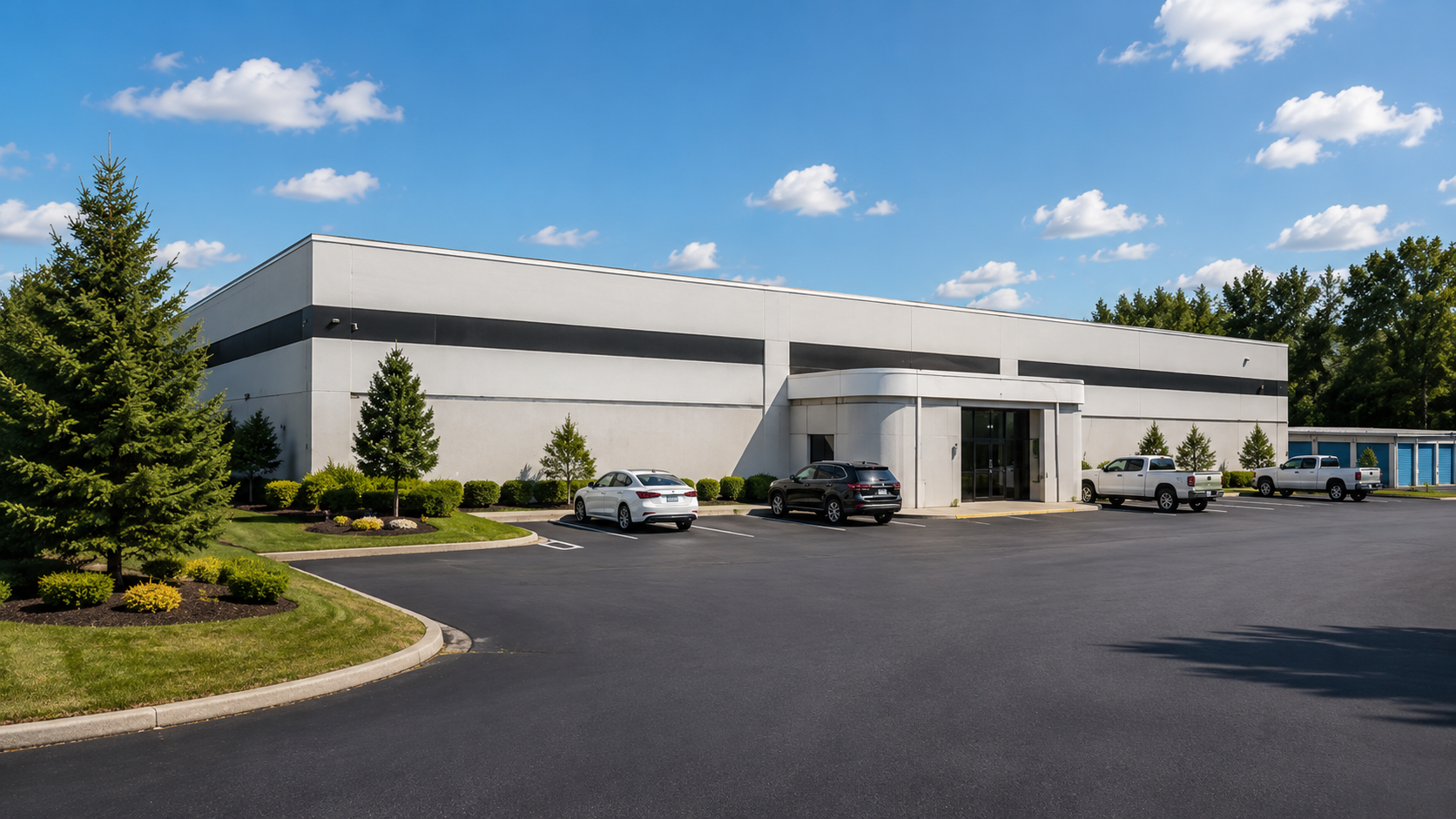
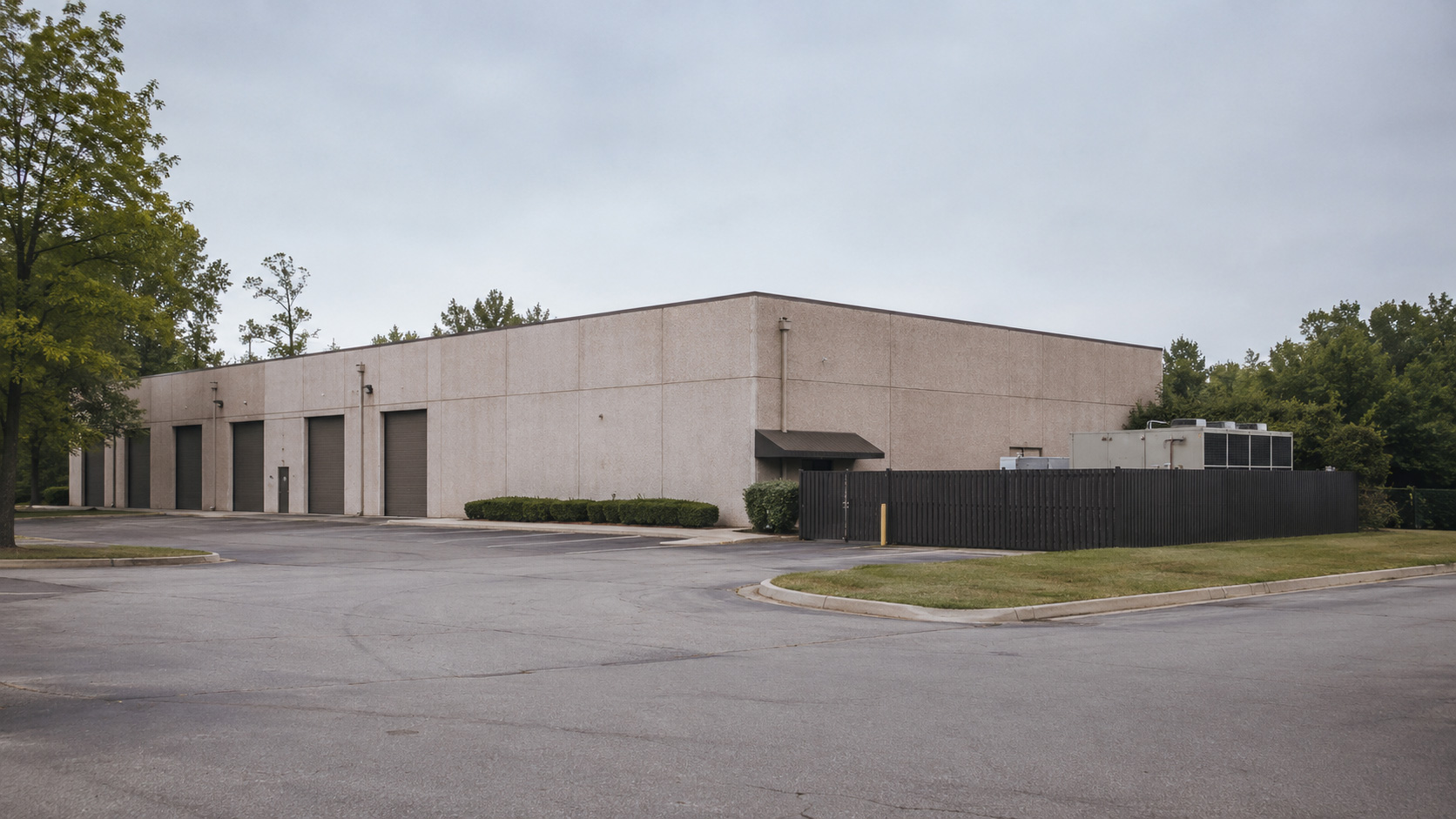
The building went up in the late 1980s as a warehouse. Freight came in, freight went out, loading docks ran through the day. In the 1990s it was renovated for self-storage, which is what it has been ever since — customers coming and going seven days a week, trucks in the lot, gates opening early.
It is a long concrete structure on roughly ten and a half acres, backing onto I-75, with rows of storage units, a parking area, and a band of mature trees around the edge.
None of that is proposed to change. The building stays. The trees stay. The paving stays as it is, with no net increase. The storage business continues on the majority of the site, with the same operation and the same customers.
What changes is that roughly 17% of the site becomes an enclosed computing facility. That is the proposal in one sentence.
The three things you don't do
The useful way to understand adaptive reuse is by subtraction — by listing what a project like this skips.
You don't clear land. There is no site to prepare, because the site was prepared in about 1987. No trees come down. No grading. No months of earthmoving equipment doing the thing that earthmoving equipment does at seven in the morning.
You don't remediate. This is not a contaminated site being made safe, which is its own long process with its own disruptions. It is a working commercial property that has been a working commercial property continuously for four decades.
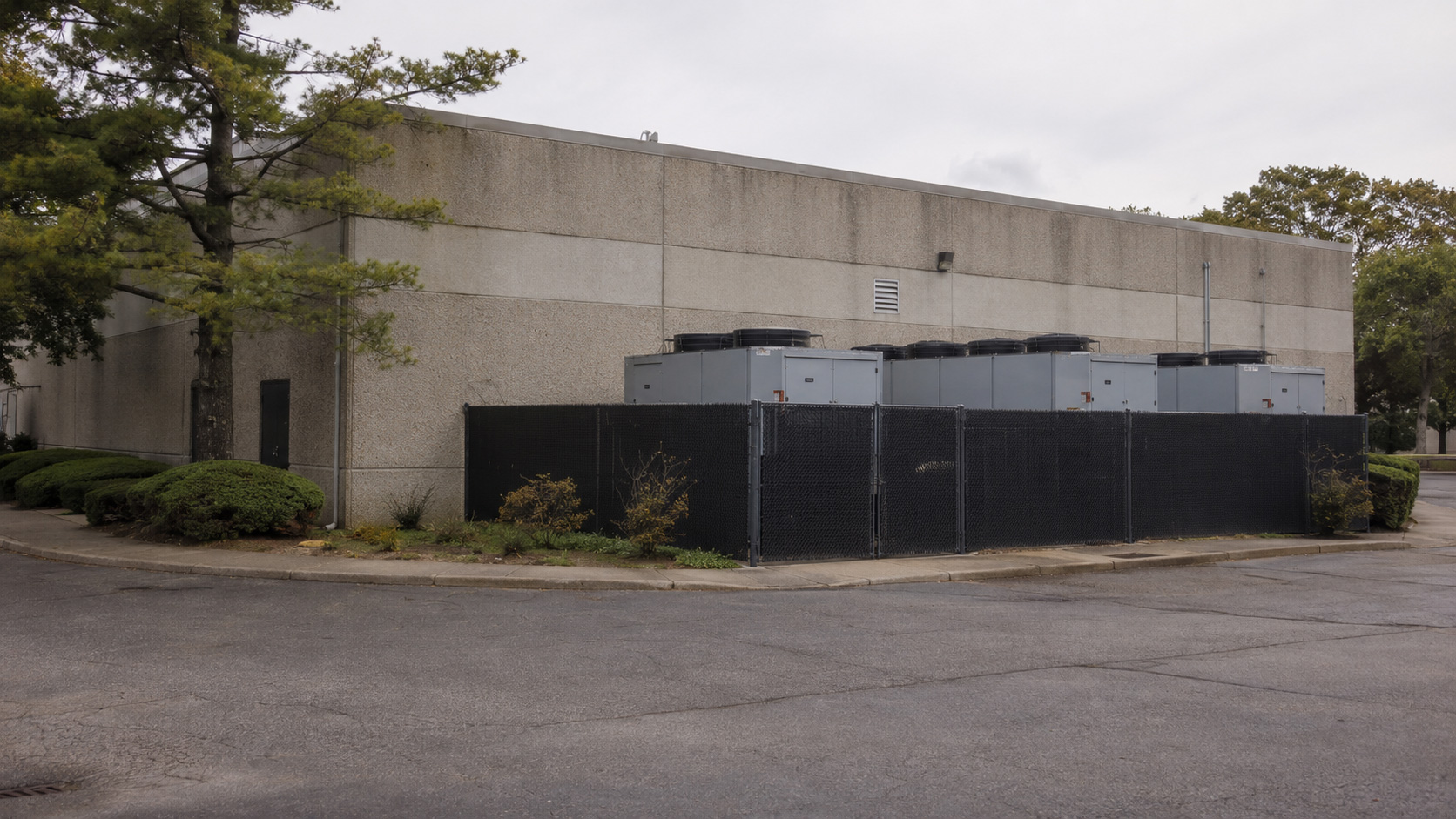
You don't build. No new principal structure. The equipment goes inside the envelope that exists. What construction does occur is interior work plus a screened equipment yard — measured in months, not years, and confined to a property that already has trucks on it daily.
Those three absences are the whole argument, and none of them is a concession we made. They are structural. They follow automatically from the fact that we started with a building instead of a field.
Why anyone would do it the other way
It is worth being honest that adaptive reuse is not obviously the better business decision, or everyone would do it.
A purpose-built facility on cleared land is easier. You design the building around the equipment rather than fitting equipment into a building someone else designed for boxes in 1987. You get the ceiling heights you want, the floor loading you want, the mechanical layout you want. Nothing is a compromise.
Working inside an existing structure means inheriting decisions made by people who had no idea what the building would eventually hold. Every one of those decisions is a constraint. Some of them are expensive.
The trade is that the constraints buy you something: a building that is already standing, in a place that already has power and fiber and road access, on a site already zoned for commercial use, in a neighborhood that has already been living next to this building for forty years.
For a project of this size, that trade is worth making. For a hundred-acre facility it would not be — you cannot fit that into a warehouse, which is exactly why those get built on cleared land somewhere else. The two are not the same thing scaled differently. They are different propositions.
What the zoning already says
One more piece of context, because it gets conflated.
The site is zoned CRC — Community Retail Commercial — within a Regional Activity Center. Both designations predate this application by years, and neither is being changed by it.
That matters because it means the question in front of Council is not whether this corridor should be commercial. It already is, and it has been. The question is narrower: which commercial use goes inside a building that is already standing on land already designated for commercial use.
Reasonable people can answer that question differently. But it is a smaller question than the one people sometimes think they are being asked.
The conditions
Everything above is a description of a plan, and a plan is a thing that can change after a vote.
So the substance of it has been submitted to the City as requested conditions of approval rather than offered as assurances. Adaptive reuse of the existing structure with no new principal building construction. No net increase in impervious surface. Perimeter trees retained. Equipment oriented away from homes.
A condition attached to a zoning approval is enforceable by the City against the approval itself. That is a different order of thing from a company saying it intends to be careful — and it is the only reason the paragraphs above are worth more than the paper they are printed on.
The unglamorous version
There is no compelling narrative here, and we have stopped trying to find one.
A building has been sitting on Powers Ferry Place for about forty years doing progressively quieter things — first freight, then storage, and now a proposal for something quieter still. The site is already commercial. The power is already in the ground. The trees are already grown.
The most interesting thing about this proposal is how little of it is new. That is not a selling point in the ordinary sense. It is just what adaptive reuse means when you say it in plain words.