What it means to plug into a utility the city owns
In most places, a new industrial customer is good news for shareholders somewhere else. Marietta isn't most places.

Published by theEdge, the applicant in Case Z2026-12. This is our account of our own project.
There are roughly two thousand community-owned electric utilities in the United States, and most Americans have never lived near one. If you grew up anywhere served by a large investor-owned utility, the arrangement is so familiar it disappears: the power company is a company, it sells you electricity, and where the money goes afterward is not a question you have ever had cause to ask.
Marietta is one of the exceptions. The electric utility here is a department of the city. Not a private company operating under a franchise agreement, not a regional monopoly with a local office — a city department, the way the fire department is a city department.
Almost nobody thinks about this, including people who have paid a Marietta Power bill every month for twenty years. But it changes the arithmetic of a project like ours completely, and it is one of the honest reasons this site makes sense.
What changes when the utility is the city
Consider the same proposal in a place with an investor-owned utility.
A large new commercial customer arrives and starts buying a great deal of electricity. That is good for the utility. The utility is a company with shareholders, and the shareholders are wherever shareholders are. The revenue leaves. The city gets whatever property tax the building generates and some jobs, and that is the extent of it.
Now the same proposal in Marietta. The customer buys the same electricity at the same commercial rates. But the utility is the city, so the revenue does not leave — it goes into the same accounts that pay for everything else the city does.
This is not a benefit we are offering. We did not arrange it or negotiate it. It is a structural fact about how Marietta chose to organise its utility long before we filed anything, and the effect is simply that a commercial customer here is worth more to the city than the same customer would be somewhere else.
The question underneath the question
When people ask about power at a public meeting, the question is almost never "where does the electricity come from." It is a proxy for a different question, which is: is this going to cost me anything?
That is the right question, and it deserves the mechanism rather than a denial.
A utility carries fixed costs regardless of how much anyone uses. The poles, the substations, the trucks, the crews, the billing system — those exist whether demand is high or low, and they have to be paid for. Those costs get spread across everyone connected to the system.
Add a large, steady commercial customer and the same fixed costs are spread across a broader base. That works in residential ratepayers' favour, not against it. It is the same logic as any shared cost: more people carrying it means each one carries less.
The second half of the answer is that infrastructure upgrades required to serve this building are funded by this building. If serving the facility requires equipment, that cost sits with the project, not with the utility's other customers. That is in the application, and it is not a courtesy — it is the standard arrangement for a commercial customer of this size, and it is what "privately funded" means in practice.
There is no public subsidy sought. Not a reduced rate, not an abatement, not a grant. Zero.
Using what's already there
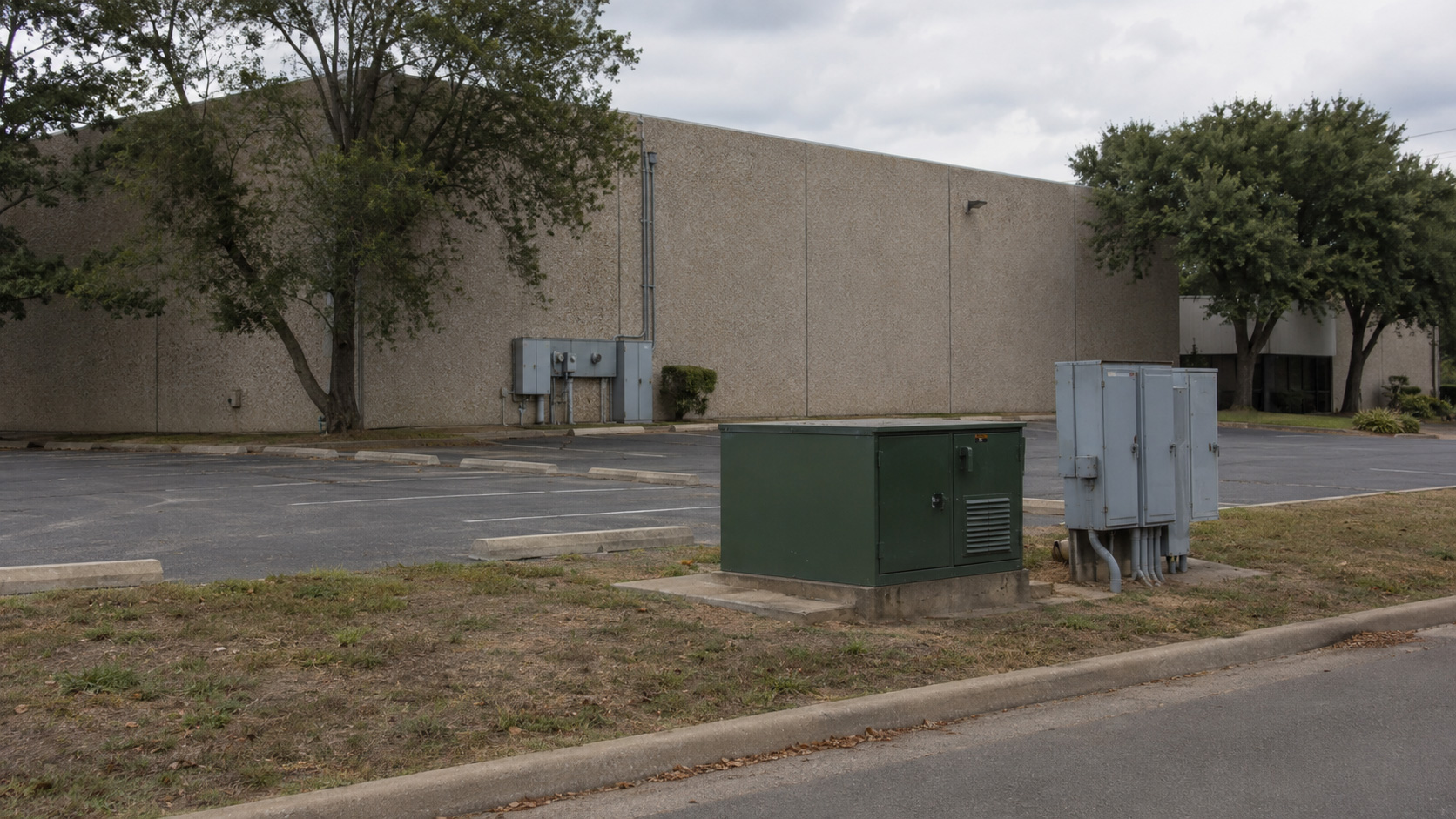
The other reason this corridor works is unglamorous: the power is already in the ground.
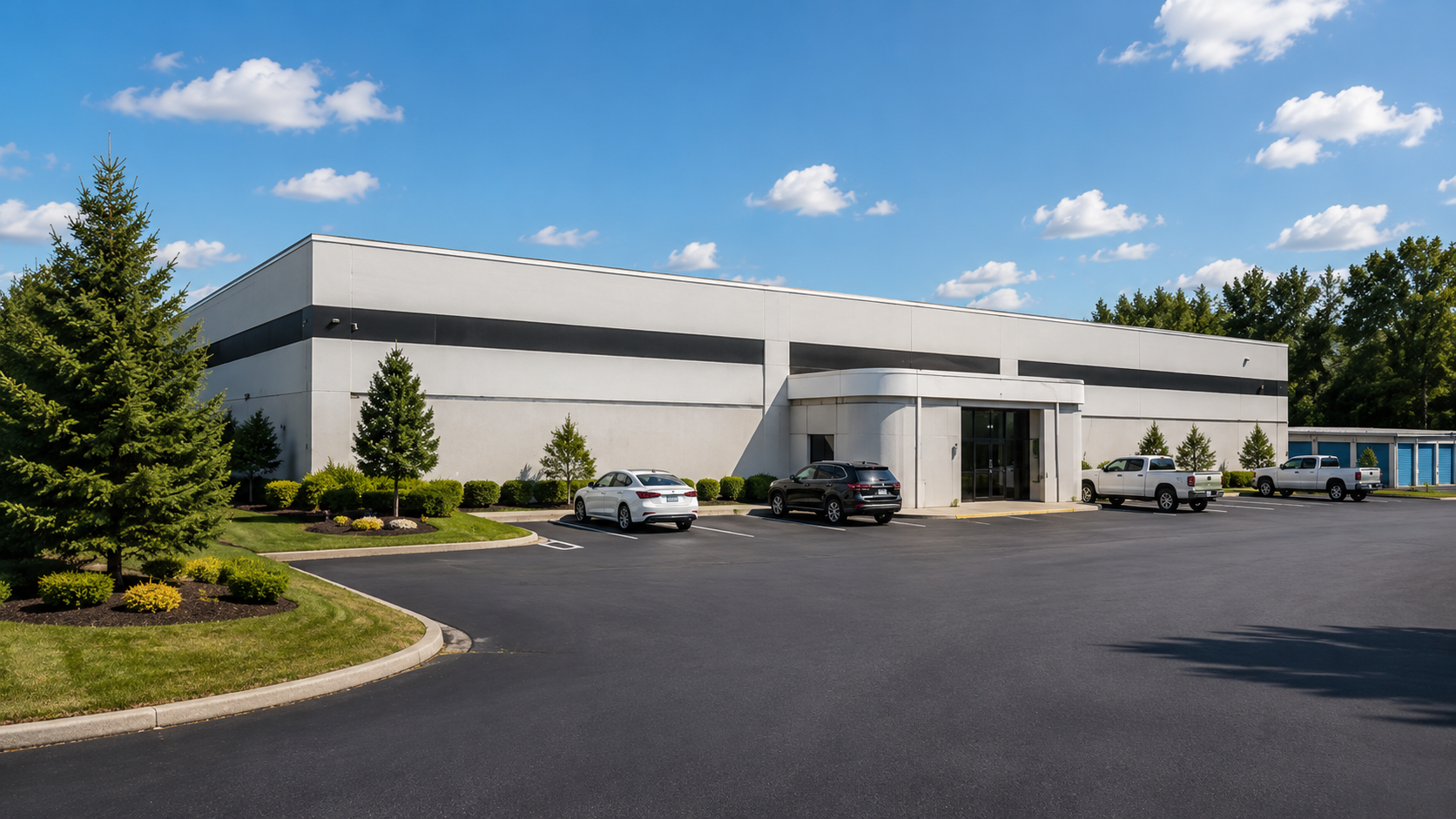
Northchase Parkway was built for commercial use. There is roughly 800,000 square feet of office space around this site. The electrical capacity to serve a commercial corridor was installed when the corridor was developed, and it is still there.
So there is no new substation in this proposal. No power plant. No major transmission expansion. The facility is designed for 12 megawatts of IT load within an 18 megawatt total facility design, and it draws that from capacity that exists.
That is the least dramatic fact in this piece and probably the most important one. The reason this proposal is small is that we chose a site where the infrastructure already existed rather than one where it would have to be built. Everything else follows from that — including the fact that nobody has to build anything on anyone's behalf.
The claim we're not going to make
Here is where our industry usually overreaches, so it is worth stopping short of it deliberately.
On the hottest afternoons of the year, utilities ask large customers to reduce load. We can do that. The facility can step down its draw when the system is under stress, and doing so is genuinely useful — it is one fewer large demand on the grid at the moment demand is highest.
What that means is that we stop taking as much. It does not mean we power anyone's house.
It does not mean we are a resource to the grid, or a partner to the utility, or any of the other phrasings that get used to make demand response sound like generation.
Reducing demand at the right moment is a real thing and a modest one. We would rather describe it accurately and have you believe the rest of the page than describe it grandly and have you correctly suspect the whole thing.
The number we're not sure about
Our estimate is that the facility would generate roughly $12 million a year in revenue to Marietta Power.
That figure is an estimate, and we have marked it as one everywhere it appears on this site. It depends on how much power the building actually draws, which depends on how busy it is, which depends on things nobody can promise in advance. It is our honest projection rather than a commitment, and if someone wants to interrogate the basis of it, they should — that is what an estimate is for.
We could have written a confident number. Confident numbers are more persuasive, right up until someone checks one.
The qualitative point survives without it: a city-owned utility means a commercial customer's payments stay in the city. That is true at any volume, and it does not depend on our arithmetic being right.
Why it's worth knowing
Most of what gets argued about at zoning hearings is about impact — noise, traffic, water, light. Those are the right things to argue about and they are covered elsewhere on this site.
But there is a version of the power question that is not about impact at all. It is about whether a thing that arrives in a place gives anything back to that place, or simply extracts and departs.
In a city that owns its own utility, the answer to that question is structural rather than a matter of goodwill. The money stays because of how the city set itself up, not because of anything we decided to do. That seems worth knowing about the place you live, whatever anyone concludes about the building.