Why this building forgets everything it does
Inference and training are different jobs. Only one of them keeps anything, and it isn't the one happening here.

Published by theEdge, the applicant in Case Z2026-12. This is our account of our own project.
At a Council meeting in July, someone said they did not know what we were storing on site. Nobody on our side answered the question properly, which was our failure and not theirs — it is a completely reasonable thing to want to know about a building full of computers going up near your house.
The answer is nothing. But "nothing" is the kind of answer that sounds like a dodge unless you explain the machine, so here is the machine.
Two different jobs
Computers in facilities like this one do one of two broadly different things, and the distinction is the whole of this article.
Training is the job of building a model. You take an enormous quantity of material, run it through hardware for weeks or months, and the result is a model — a large file that encodes patterns from everything it was shown. Training is where data accumulates. It is where the questions about what was collected, and from whom, and with what permission, are live and serious questions.
Training does not care where it happens. It takes weeks. Nobody is waiting. You put those machines wherever electricity is cheapest and nobody notices, which is generally somewhere remote and enormous.
Inference is the job of using a model that already exists. A request arrives with a specific question. The hardware runs it against the model, produces an answer, and returns it. Then it does the next one.
Inference does care where it happens, because someone is waiting for the answer. That is the entire reason a facility like this belongs near a city rather than three states away.
This building does inference. It is not a training site. It does not build models; it runs them.
What a second inside actually looks like
The concrete version is more useful than the abstract one.
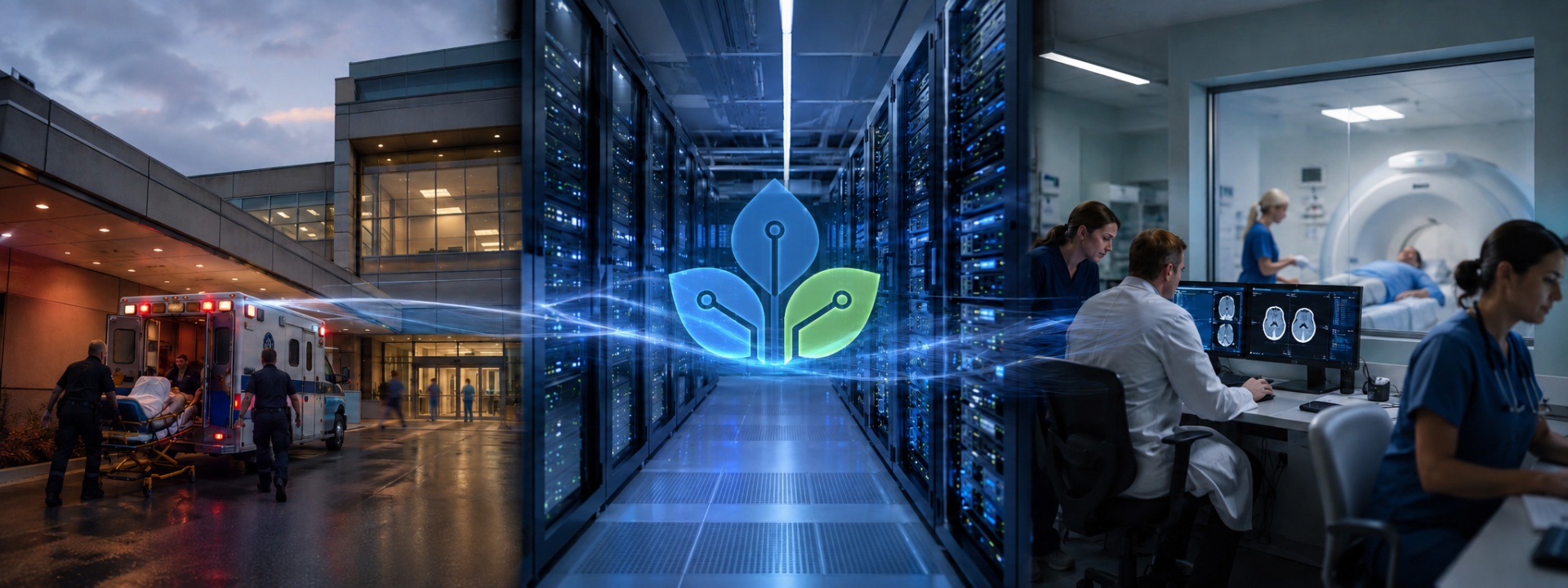
A request arrives — say a hospital system asking whether a scan needs a radiologist's attention now rather than in an hour. The request contains what is needed to answer it and nothing else. It hits the hardware. The model produces an answer. The answer goes back.
That sequence takes milliseconds. Then the next request arrives and the same thing happens again, thousands of times over, all day.
What does not happen at any point in that sequence is accumulation. The request is not filed. The answer is not filed. There is no profile being assembled, because there is nothing to assemble it from and nothing to assemble it in. The building's job is to answer and forget, and the forgetting is not a policy we adopted — it is what the job is.
The comparison that gets used is a calculator. You type in a sum, it gives you the answer, and it does not keep a record of your arithmetic. It is not being discreet. There is simply nowhere for the sum to go.
The obvious follow-up
The obvious follow-up is: fine, but you could change that.
That is fair, and it is worth answering rather than deflecting.
Two things are true. The first is that inference and training are different enough physically — different hardware configurations, different storage architecture, different power profiles — that converting one into the other is not a switch someone flips. It is a different building.
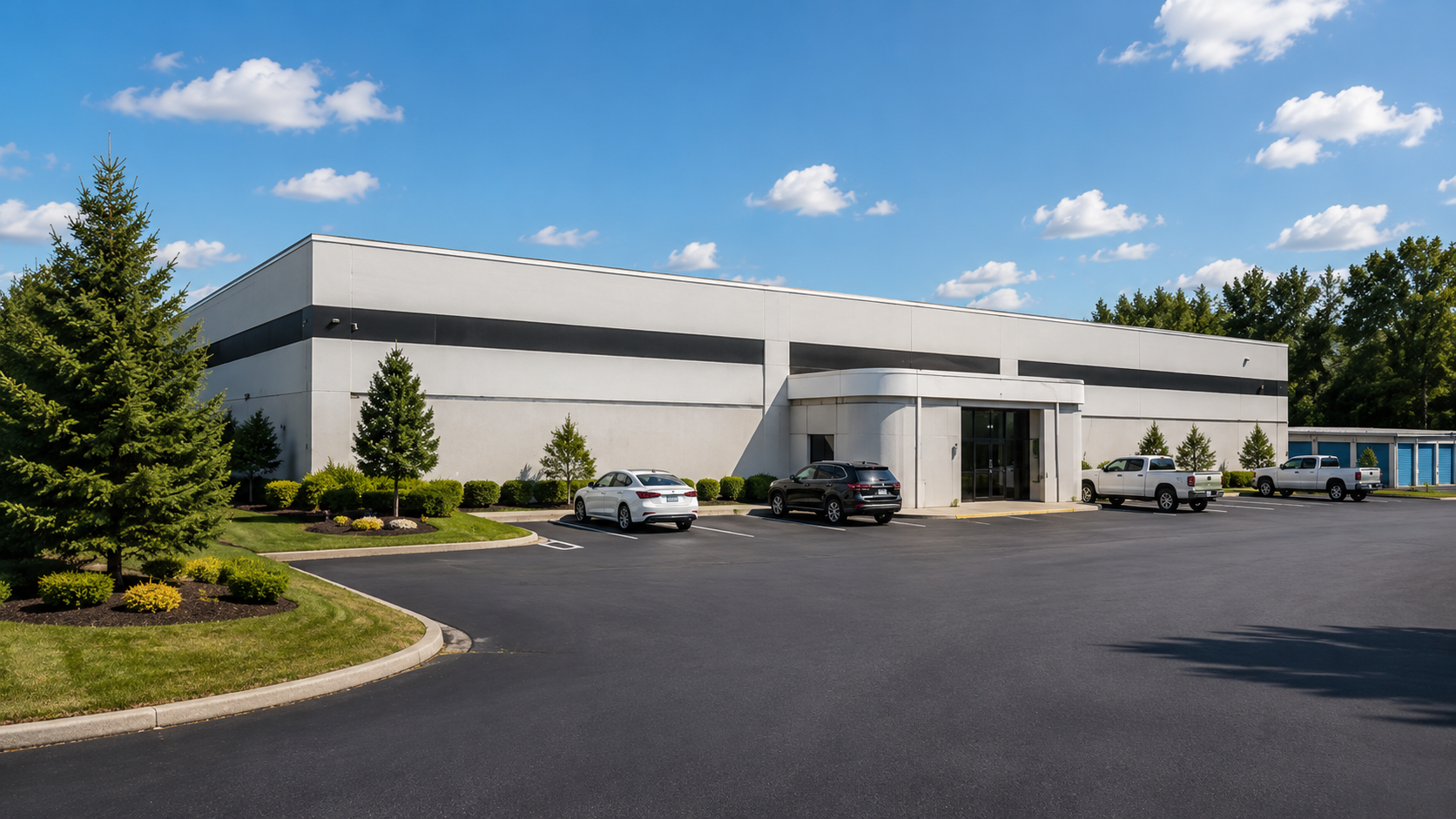
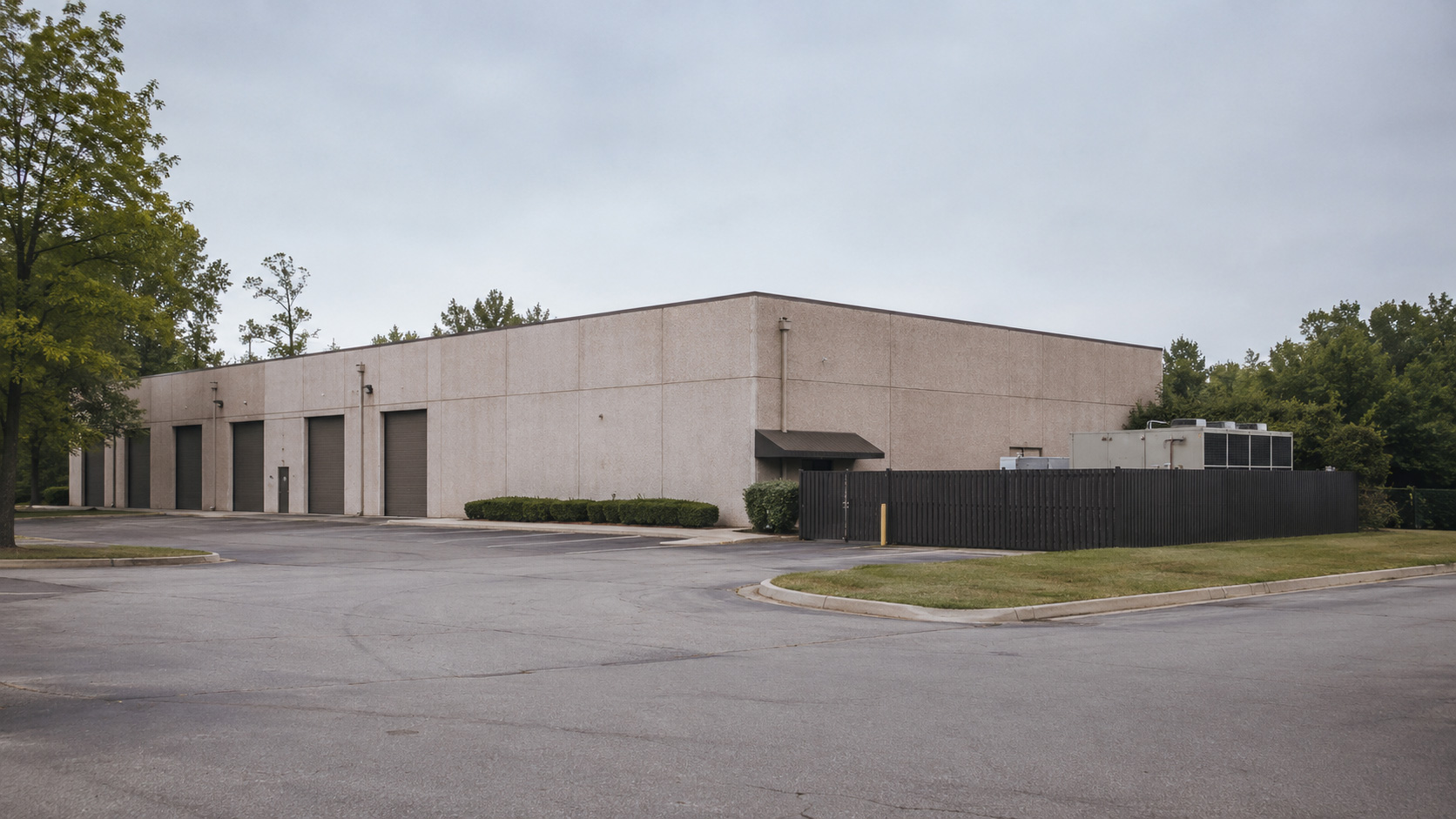
The second, and the one that actually matters, is that the site would be a poor choice for it anyway. This is 12 megawatts of IT load inside 17% of a ten-and-a-half acre site in a building from the 1980s. Training facilities are built at scales this site cannot physically accommodate, in places where power is far cheaper than it is in a Georgia commercial corridor. Nobody would choose this building for that job. The economics are wrong before the physics get a vote.
That is not a promise. It is just what the site is.
The cameras question
The other half of the surveillance concern is more direct: are you watching us?
No. No cameras face the neighborhood. Security cameras exist on the property the way they exist on any commercial facility with equipment in it — pointed at doors and equipment, for the same reason a storage facility has them, which this site already is and already does.
The distinction worth drawing is between a building that has cameras and a building that is an observer. This is the first thing. It has locks too. Neither the locks nor the cameras are about the neighborhood.
Why any building has to be nearby
There is a reason this all connects back to location, and it is the part that usually gets left out.
If inference could happen anywhere, it would happen where power is cheap, and none of this would be a conversation in Marietta. The reason it cannot is that the distance a request travels is time, and for some jobs the time is the point.
A scan flagged immediately rather than after a delay is not a technical distinction to the person waiting for the result. A fraud check that clears before a transaction completes has to actually clear before the transaction completes. A dispatch decision has a window.
Those are the jobs that need to happen near the people using them. It is why small facilities near cities exist at all, and it is why the alternative to this building is not "no building" — it is the same work happening further away, more slowly, in a facility somebody else's neighborhood is arguing about.
That is not an argument that Marietta owes anyone a building. It is just the honest account of why the location matters, which is a question we have been asked and have not always answered well.
What we got wrong in July
Worth saying plainly, since this article exists because of it.
The people we sent to answer questions at that meeting were from construction and from our law firm. They were the wrong people for a question about how the equipment works. The explanation above is not complicated and it is not confidential — it is the kind of thing anyone who works with this equipment could have said in ninety seconds, and it did not get said.
That is on us. The question was good. The answer existed. Nobody in the room connected the two, and a reasonable person watching that would draw a reasonable conclusion about what we were being cagey about.
The answer, again, is nothing. The building answers questions and forgets them. That is not a commitment we are making about our conduct — it is a description of what the equipment does, which is the only kind of assurance actually worth anything.